|
The Invisible Layer Series NO.1 | March 2026

|
|
|
|
A note from Jacqui
I'm delighted to introduce our new newsletter.
This marks the beginning of The Invisible Layer Series, where I'll share the stories behind our work and what unfolds behind the scenes at Patina Design Studio.
We'll uncover the work that sits beneath the finished result, and the decisions, challenges and orchestration required to deliver highly tailored environments for our clients.
Reach out if you have any questions, we would love to hear from you.
Warm regards,
Jacqui
|
| |
"We start with the feeling our client wants to experience in each space. It's not just about aesthetics. Our role is to design a space around that, alongside functionality and liveability, and to resolve how each element will be created and curated so the outcome is exactly as intended."
|
|
|
The Invisible Layer Series NO.1
The Concrete Tables
|
|
|
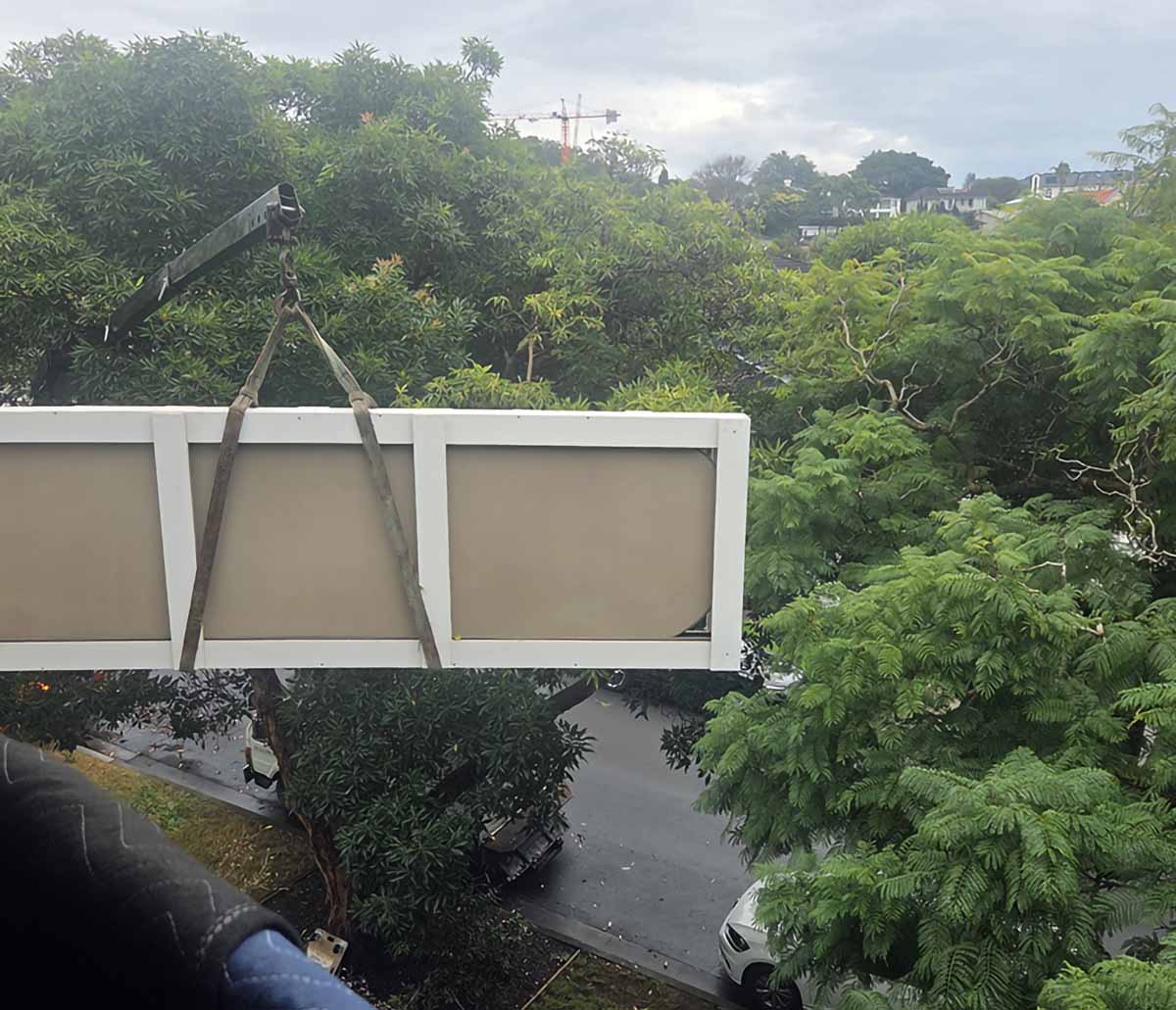
Our custom 200kg table top suspended in the air for installation.
|
|
For the first of our Invisible Layer Series, I want to share the story behind two seamless concrete dining tables we designed and had made specifically for our client's home.
The design of these tables in itself is a process. It involves attention to detail, multiple iterations, drawings, ergonomic considerations, prototypes, 3D modelling and collaboration to get it perfect. But that side of what we do is known and expected, so I'm not going to focus on that today.
The challenge. There are many other elements that aren't initially obvious when designing and curating a space. One of the challenges on this project that we had to plan for from the initial concept, was getting our two custom dining tables from Brisbane, where we had them made, into our client's third story penthouse in Sydney and installed into position.
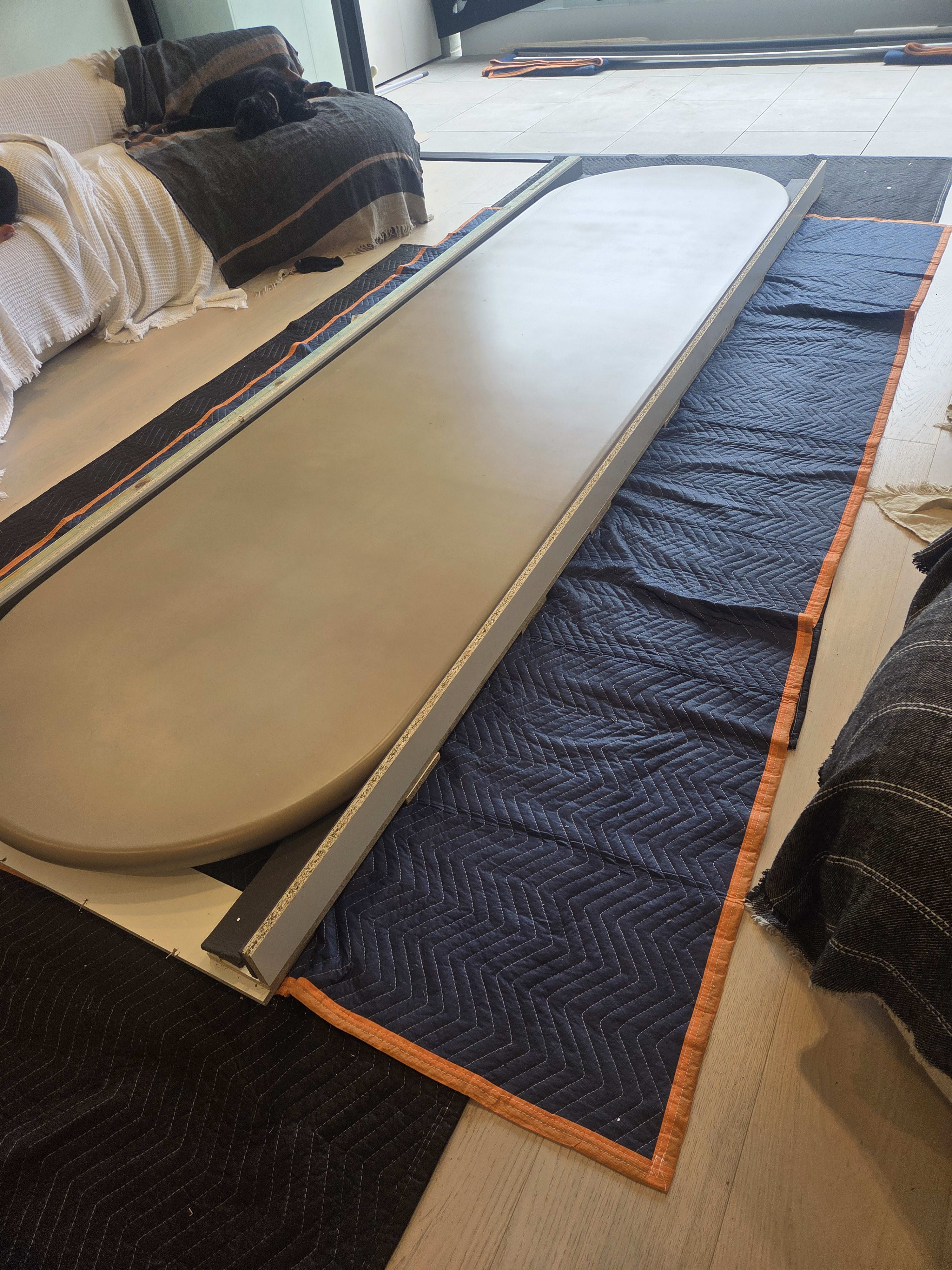
The larger table measured 3.6m and weighed 200kg without the legs.
|
|
|
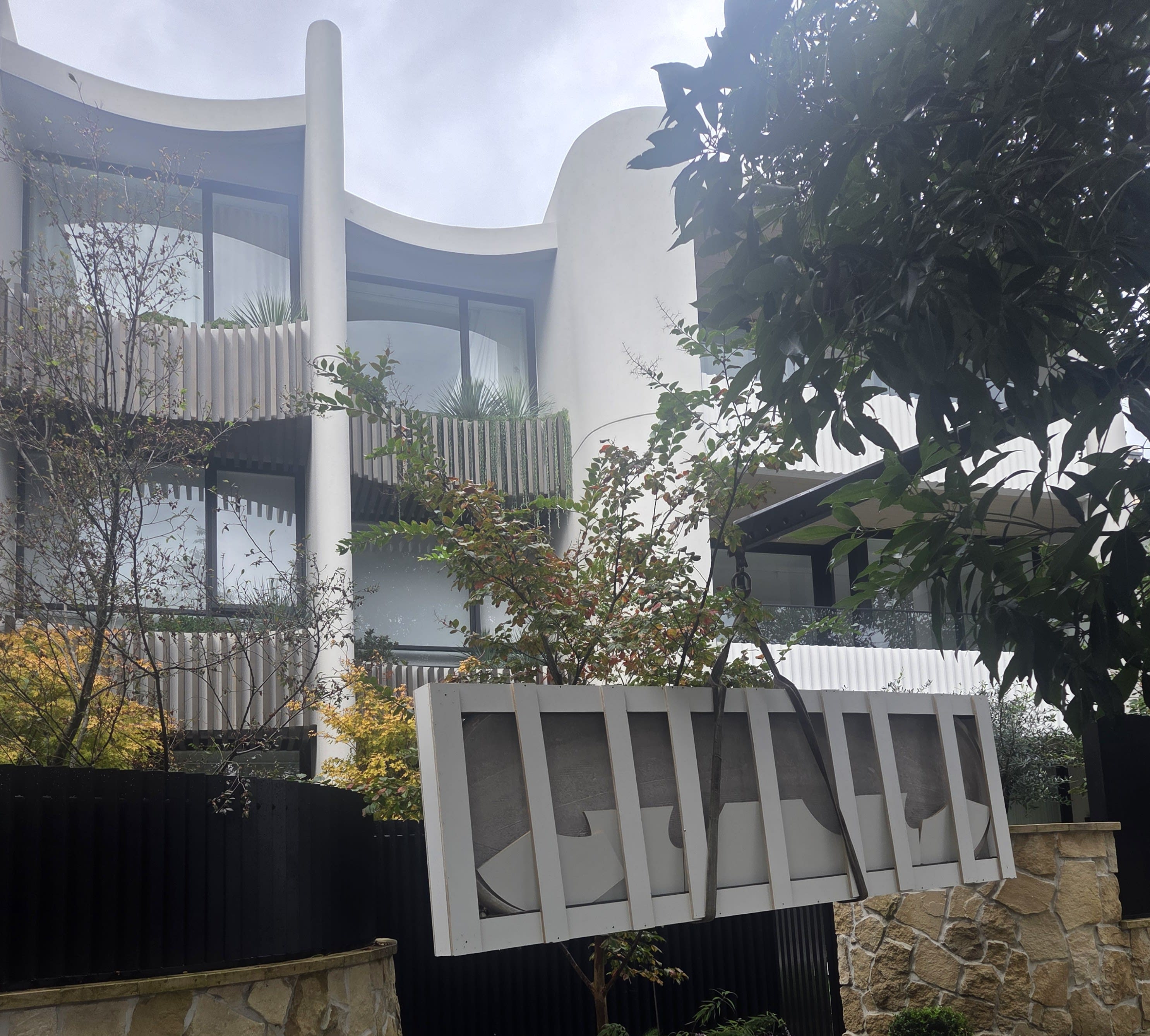
The team had to navigate each table around trees and balustrades
|
|
|
The 3.6m concrete dining table top, made in 1 solid piece to avoid joint lines
|
|
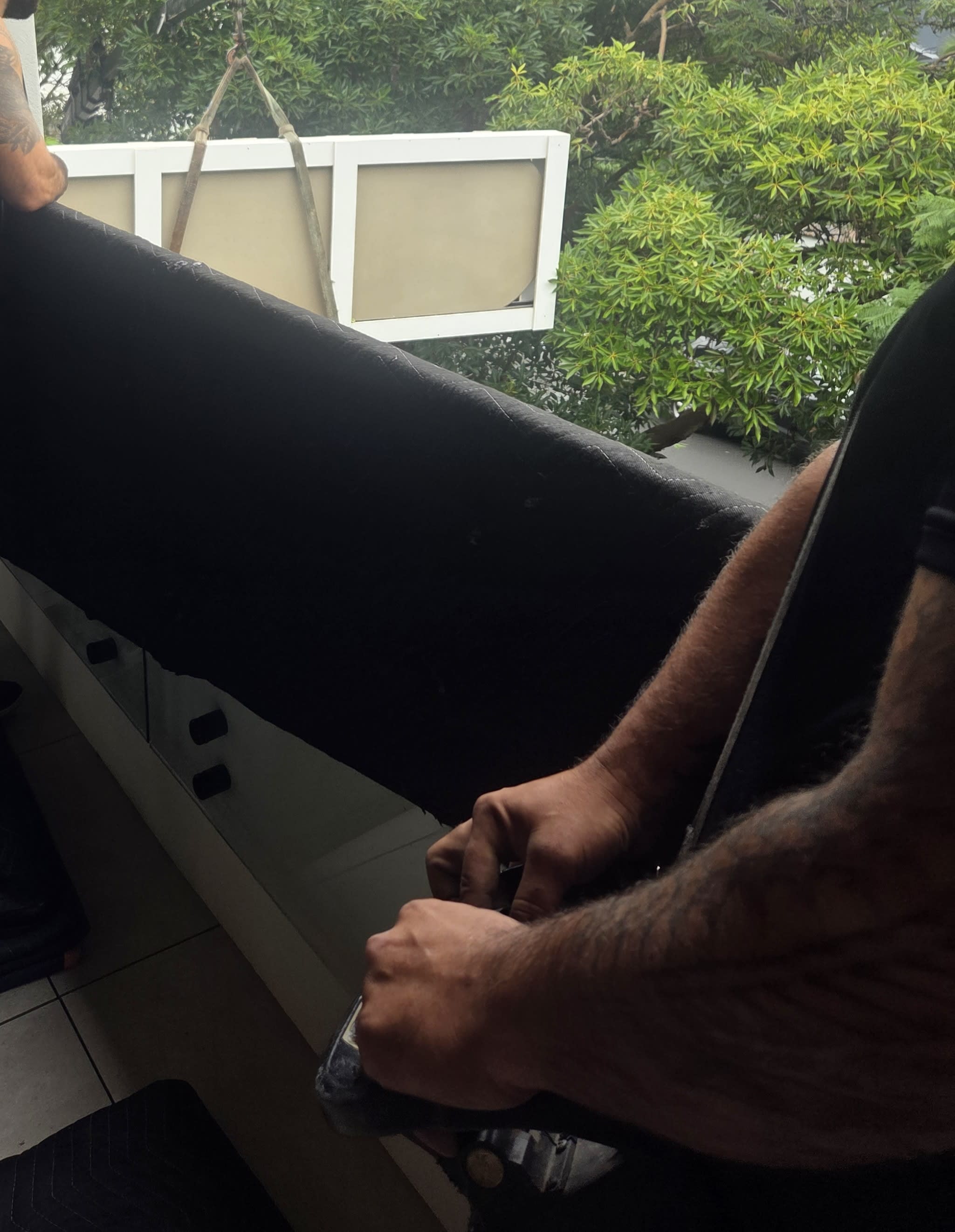
Our approach. Once on site, our installers could not carry the table tops up the stairs or fit them into the elevator, so a very specific approach was required and coordinated in advance. We reserved several parking spots alongside the property to position a crane as close to the building as possible. On the day of installation, it was also pouring with rain and our margin for error felt minimal. We waited for a break in the weather and lifted the first table above the trees and over the balcony.
|
|
|
Craning the table above the tree line and over the balustrade.
|
|
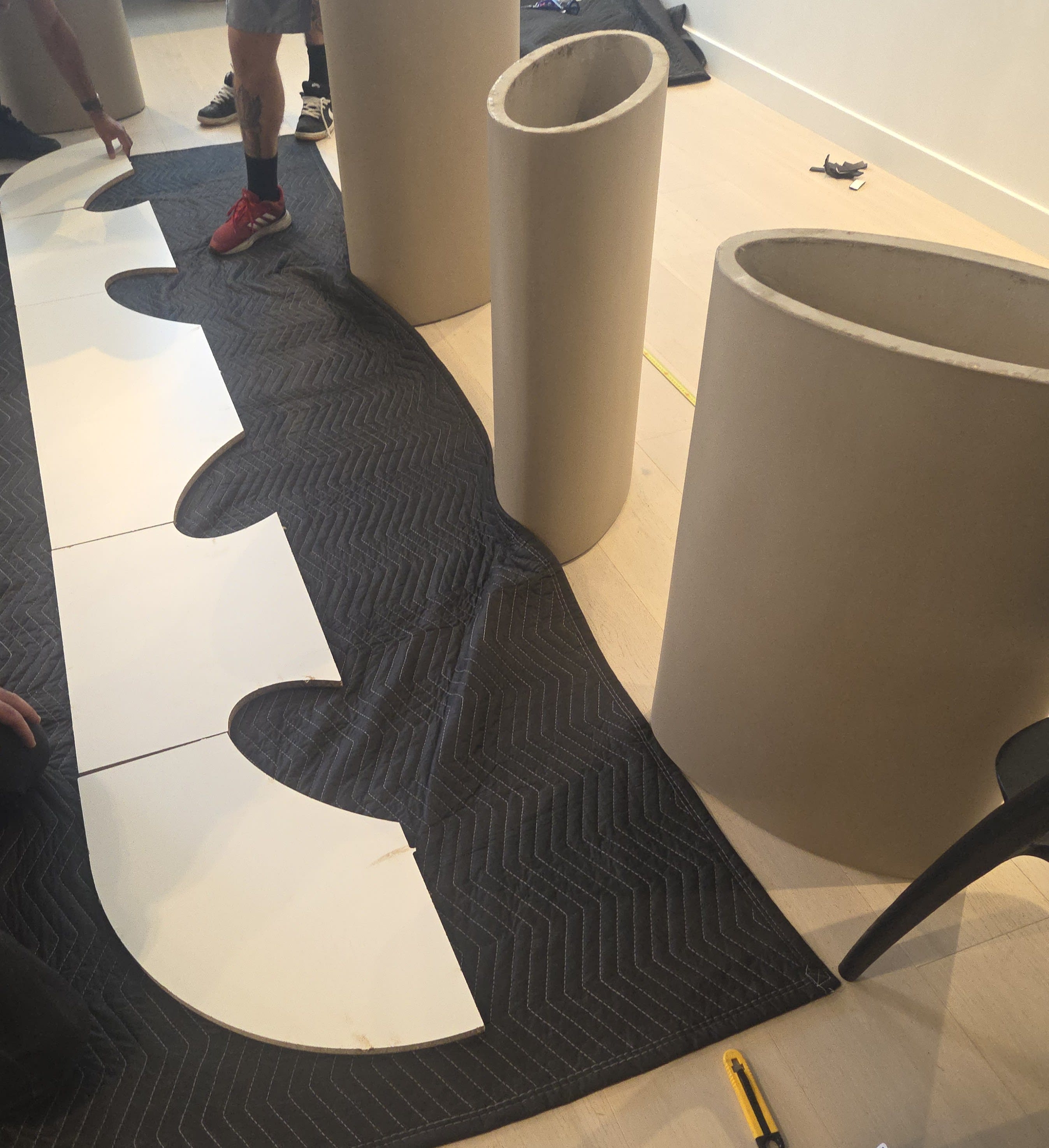
Meanwhile inside, full-scale templates were laid out on the floor to map the exact location of the legs and the table's final position. With pieces of this size and weight, it is far easier to place them correctly the first time than to attempt to move them after installation.
|
|
|
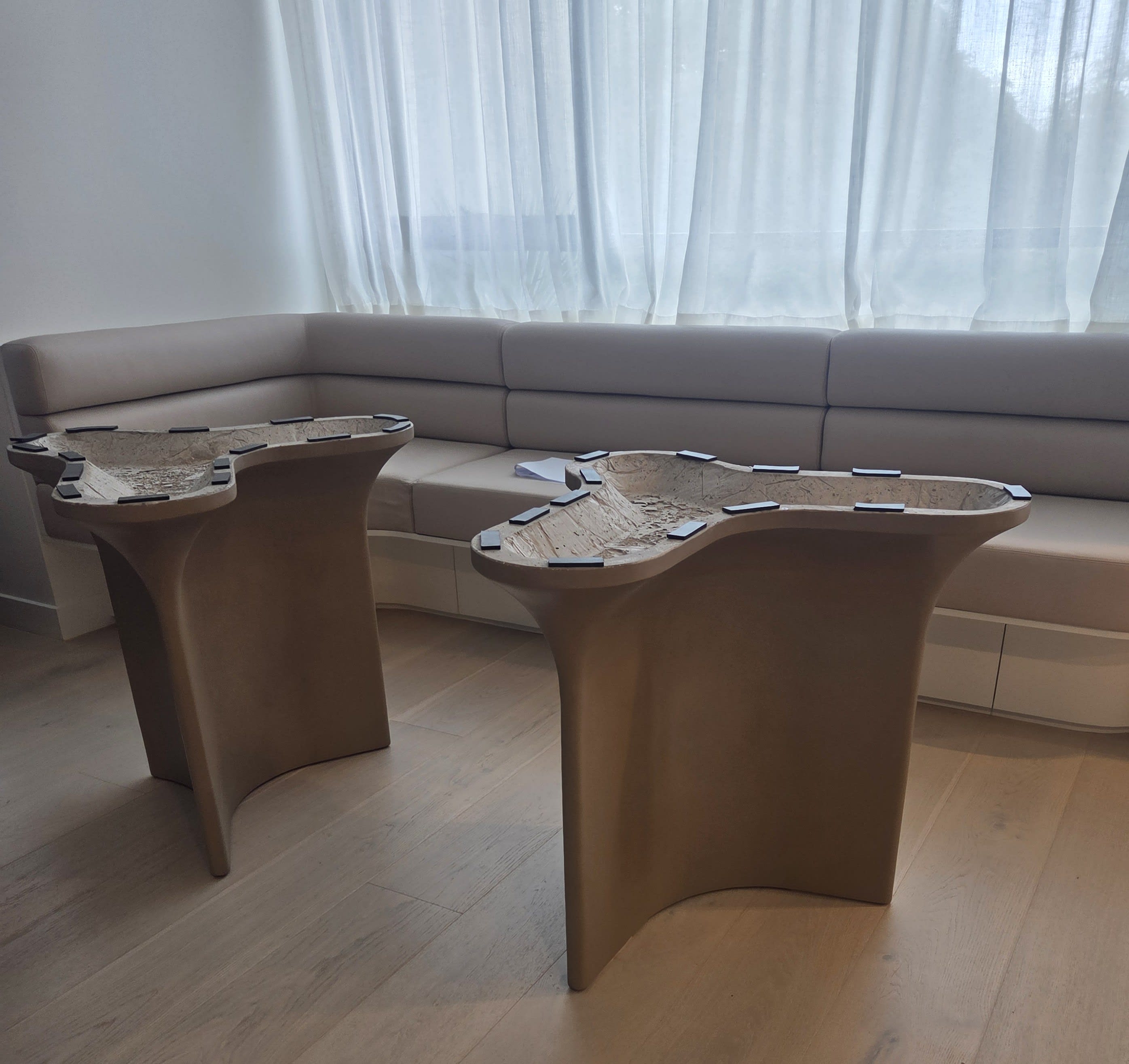
The custom legs of our smaller table design for the banquette area
|
|
|
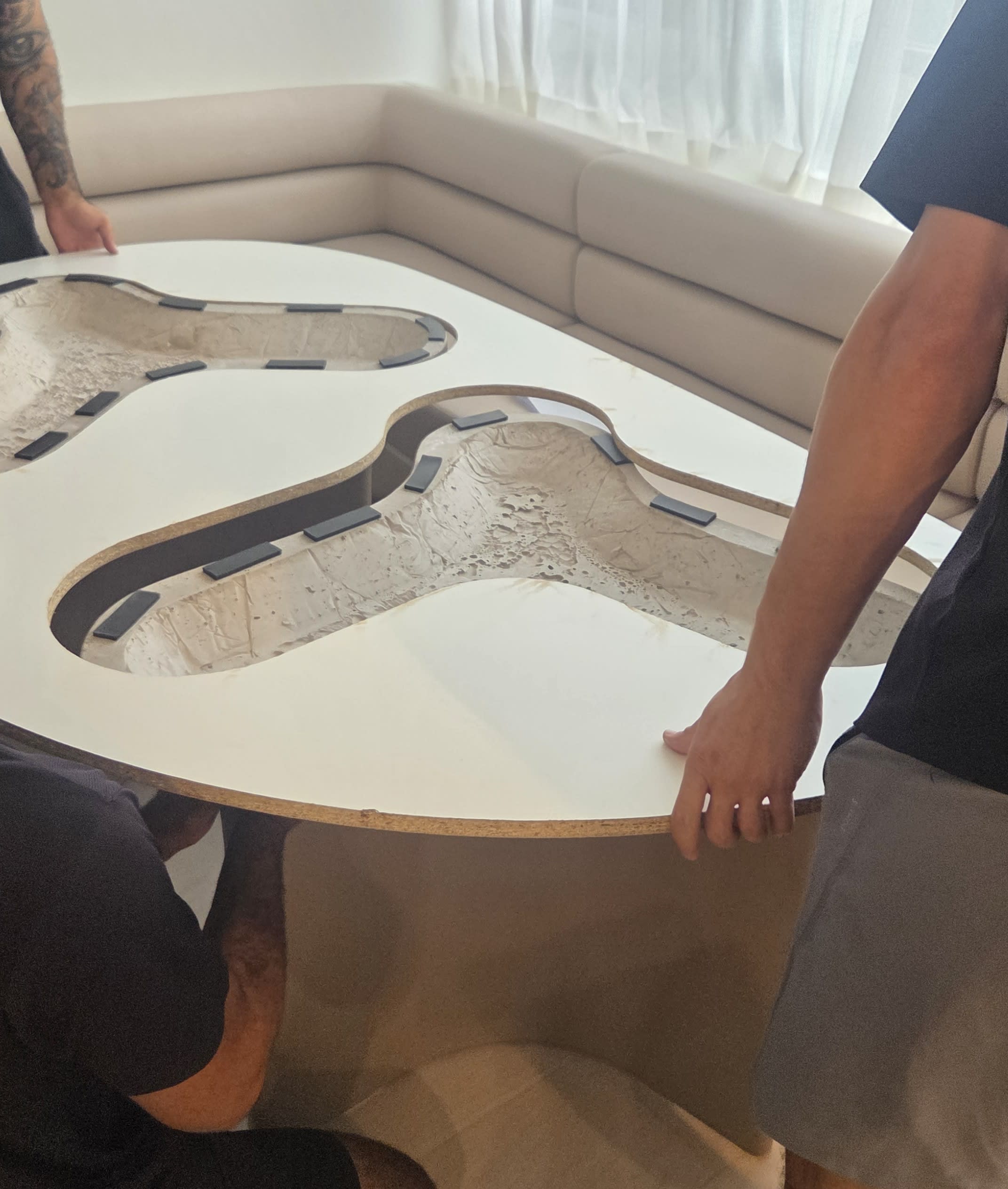
Lining up the leg to attach in the correct position to the table top
|
|
|
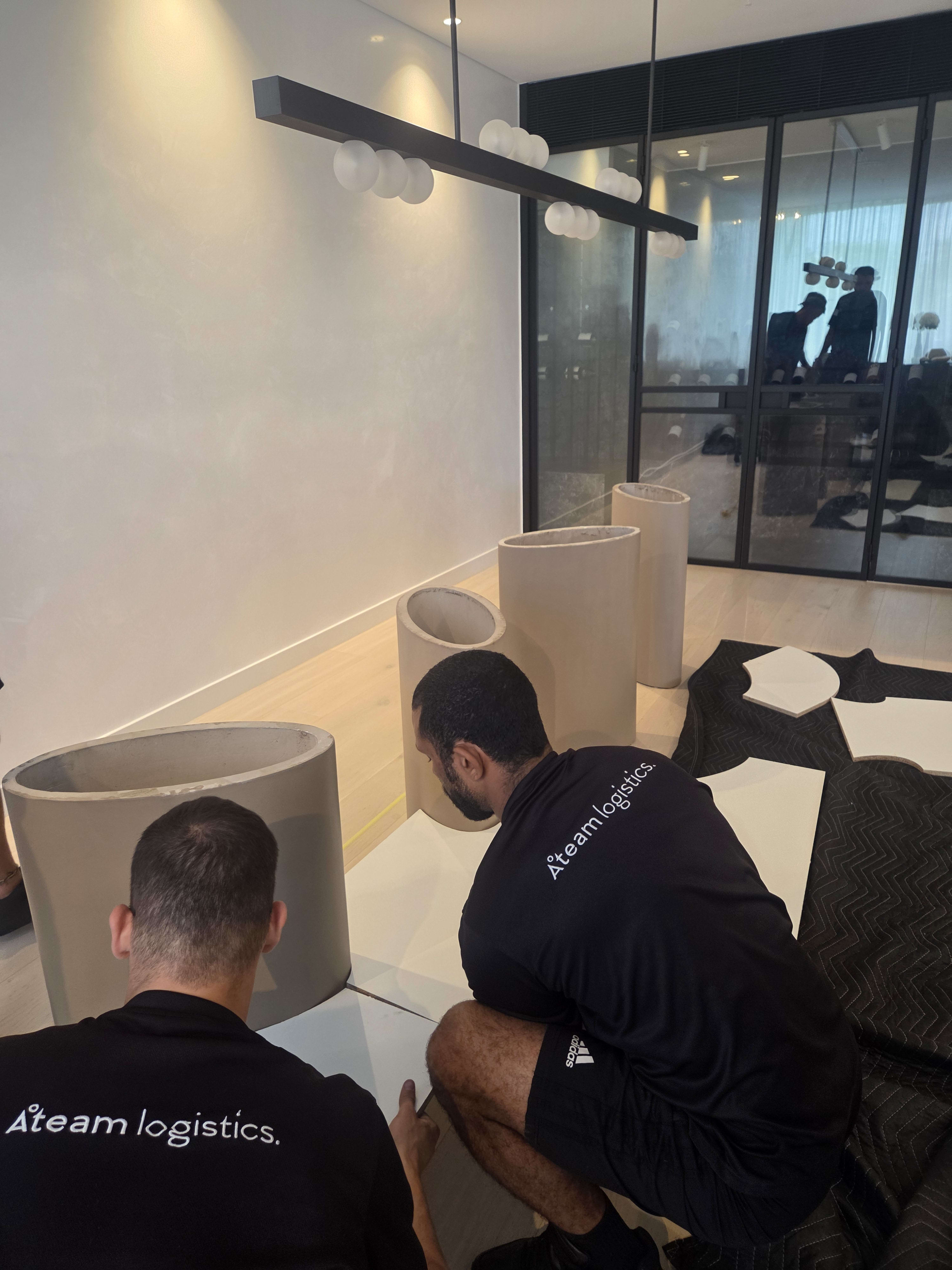
The custom legs of our larger table design for the formal dining area
|
|
|
Full-scale floor templates mapping the table's exact final position.
|
|
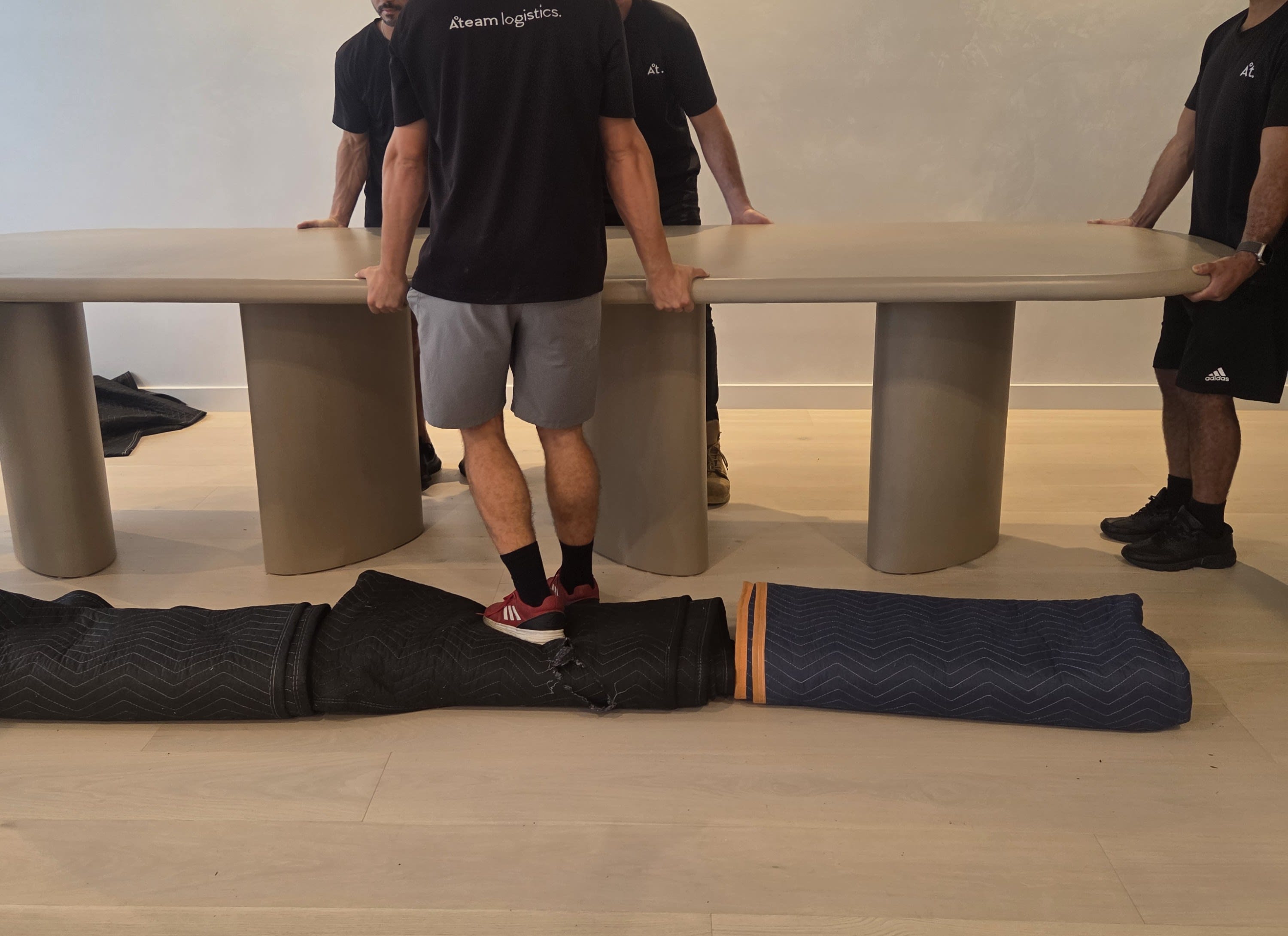
A team of six assisted our design team with the install. Every movement was calculated. A single misstep could have damaged the tables, the building or the surrounding landscape.
|
|
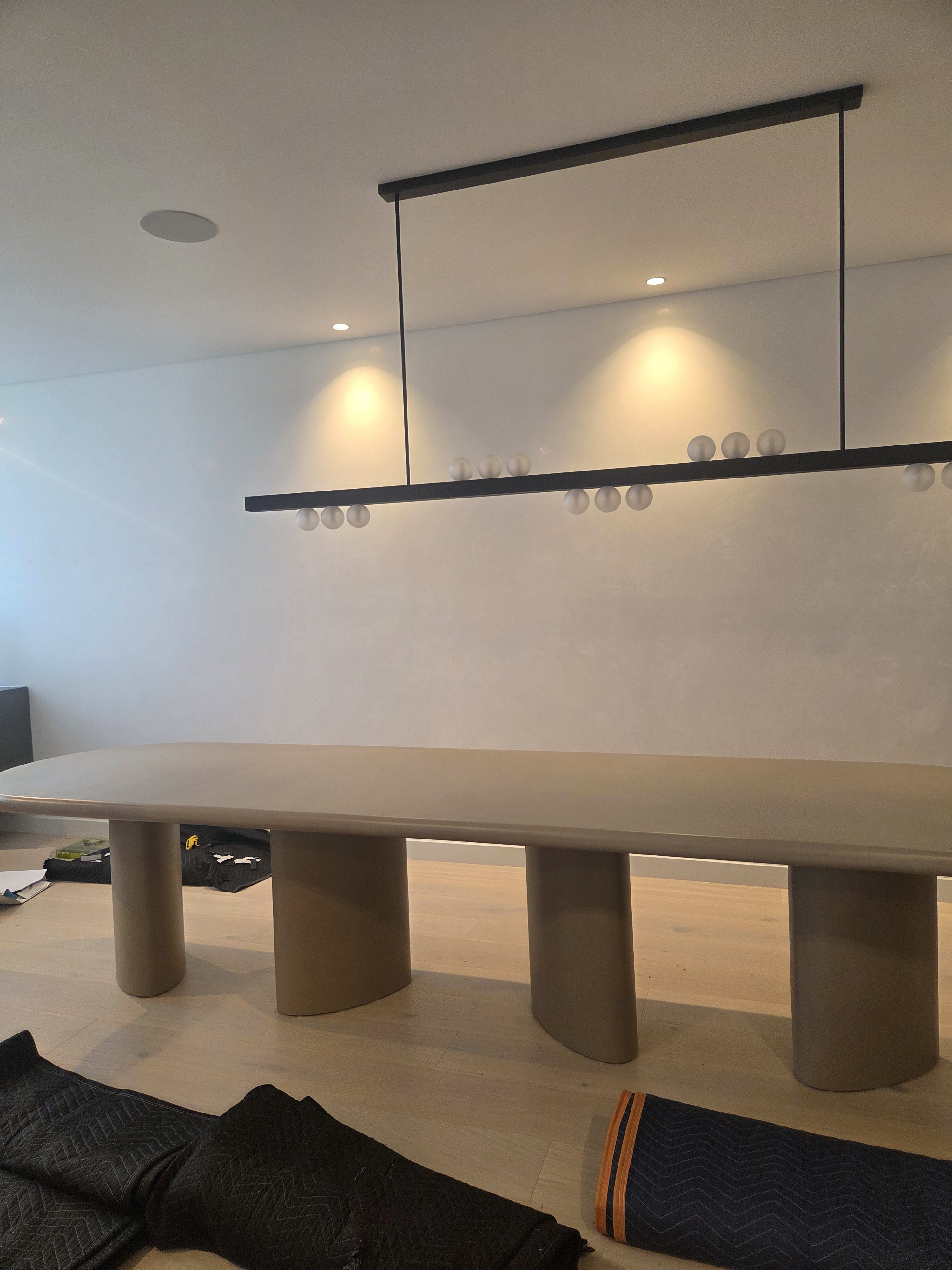
The outcome. Once inside, each piece was positioned, assembled, inspected, and refined over several hours, adjusting the alignment until they were perfect. The result was what we had envisioned during the design phase.
Sculptural, effortless and resolved within the space.
|
|
|
A six-person team on the ground and inside the penthouse during installation
|
|
The entire process took approximately five hours.
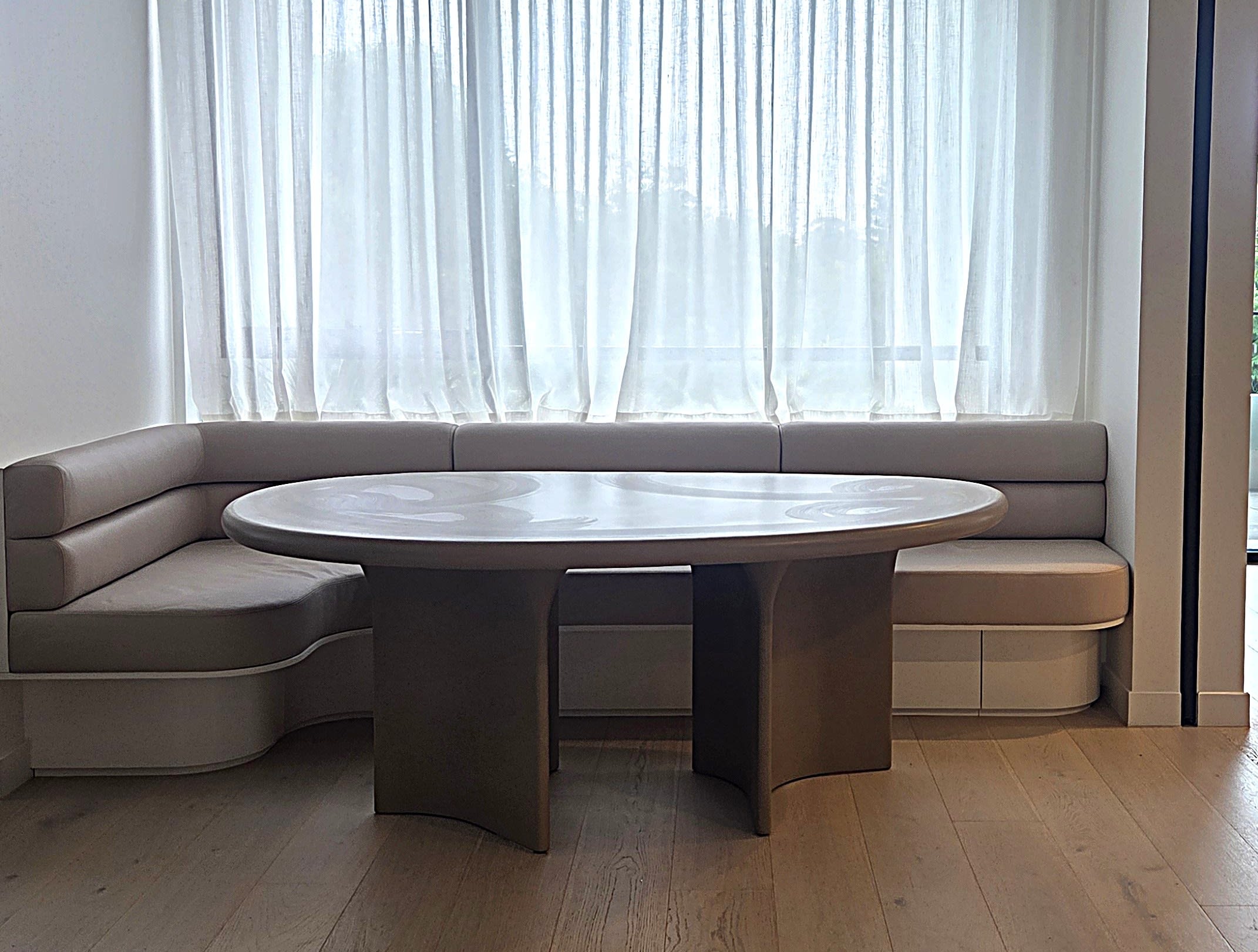
Our client simply provided access in the morning and returned to her completed dining spaces, ready for her and her family to build memories around.
|
|
|
The larger table perfectly in place
|
|
|
The completed dining space, ready for the client's first evening at the table.
|
|
For us, considered design means understanding how every element is made, transported and ultimately lives within a space, beyond how it looks.
|
|
The Invisible Layer
This is the invisible layer of design, where careful planning, foresight and problem solving shape outcomes that feel effortless.
Across new builds, renovations and furnishing projects, we orchestrate every layer and decision with precision to deliver cohesive, highly considered interiors.
|
|
|