|
The Invisible Layer Series No.3 | April 2026

|
|
|
|
A note from Jacqui
We are about to remove a wall that was already finished.
Painted. Complete.
It was constructed before we were engaged, based on the original developer-led design.
Our client later asked us to reimagine the space around how they actually wanted to live.
There is a point in every project where decisions can be resolved simply. After that point, they require more coordination, time, and cost to rework.
In this newsletter, I want to show you what that looks like in practice.
Warm regards,
Jacqui
|
| |
"What could have been resolved early became something to work around."
|
|
|
Timelines Change Everything
|
|
Two clients purchased apartments off plan, before construction was complete.
Off plan apartments generally are designed for broad appeal, not for how a specific person will ultimately live in the space.
In one project, we were engaged early, before construction had meaningfully progressed. In the other, we were brought in just before completion.
The difference was not just aesthetic. It was structural in outcome.
|
|
|
|
Bellevue Hill
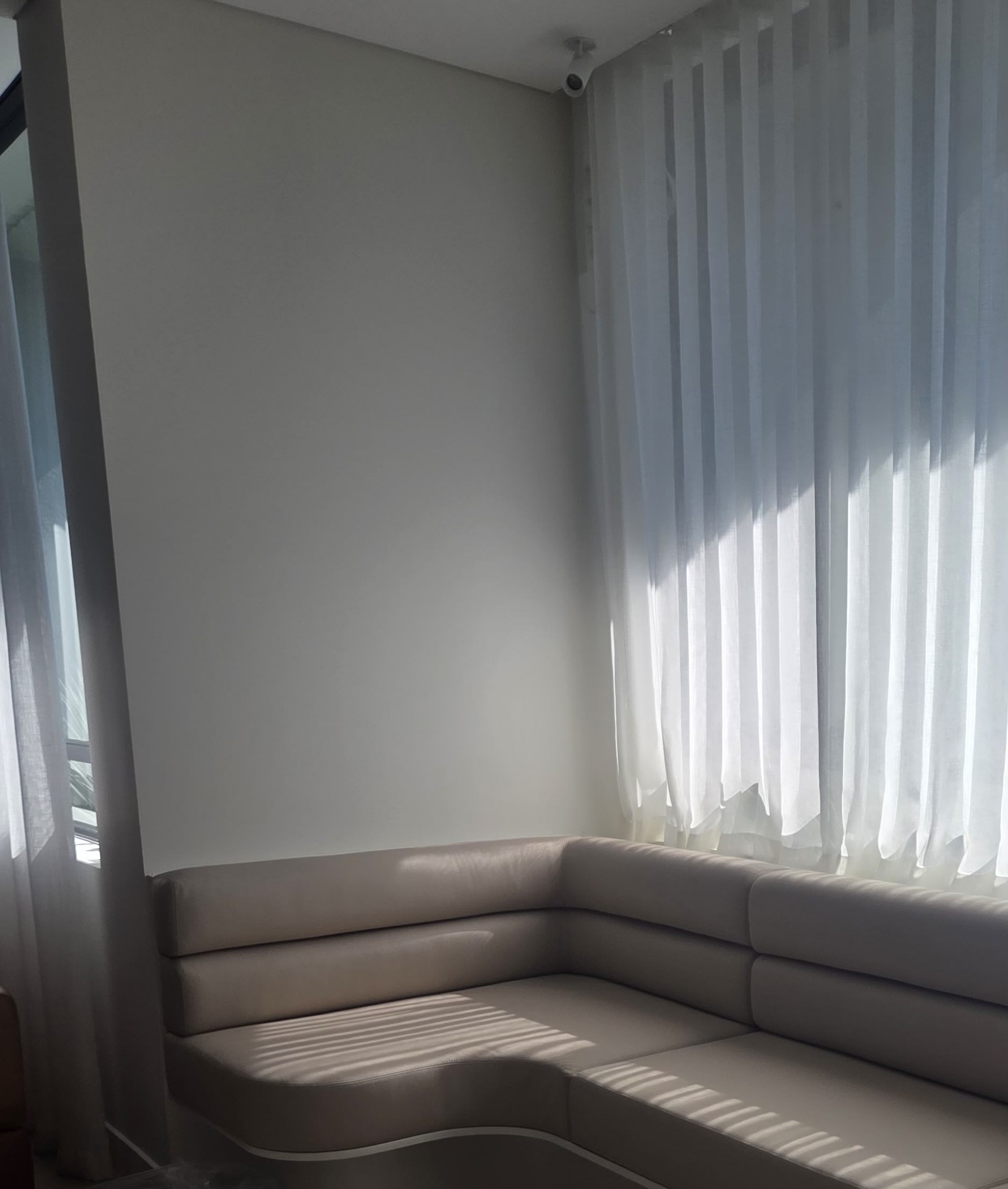
We were engaged towards the end of construction.
At that stage, many decisions had already been locked in. Layouts were fixed, joinery and finishes had been manufactured and installed, and electrical points were no longer flexible.
We were designing within an existing framework rather than shaping it.
|
|
|
|
|
The wall referenced at the beginning of this newsletter sits within this project. Our client wanted a light sculpture integrated into this location. However, the necessary power and structural support had not been anticipated by the developer.
We developed multiple design concepts, including options that preserved the existing wall and ceiling. Yet the preferred direction required integrated lighting within the sculpture itself.
To achieve this, a completed section now needs to be reopened, structurally reinforced, and have power redirected through surrounding walls and ceiling so the lighting can be controlled from the main switch on the opposite side of the room.
At framing stage, this would have been a simple inclusion.
At this stage, it becomes a coordinated intervention across multiple trades and finished elements.
A completed space is now being carefully reworked to accommodate something that could have been seamlessly embedded earlier.
The outcome remains achievable.
But it now carries impact across everything around it.
|
|
|
|
Rose Bay
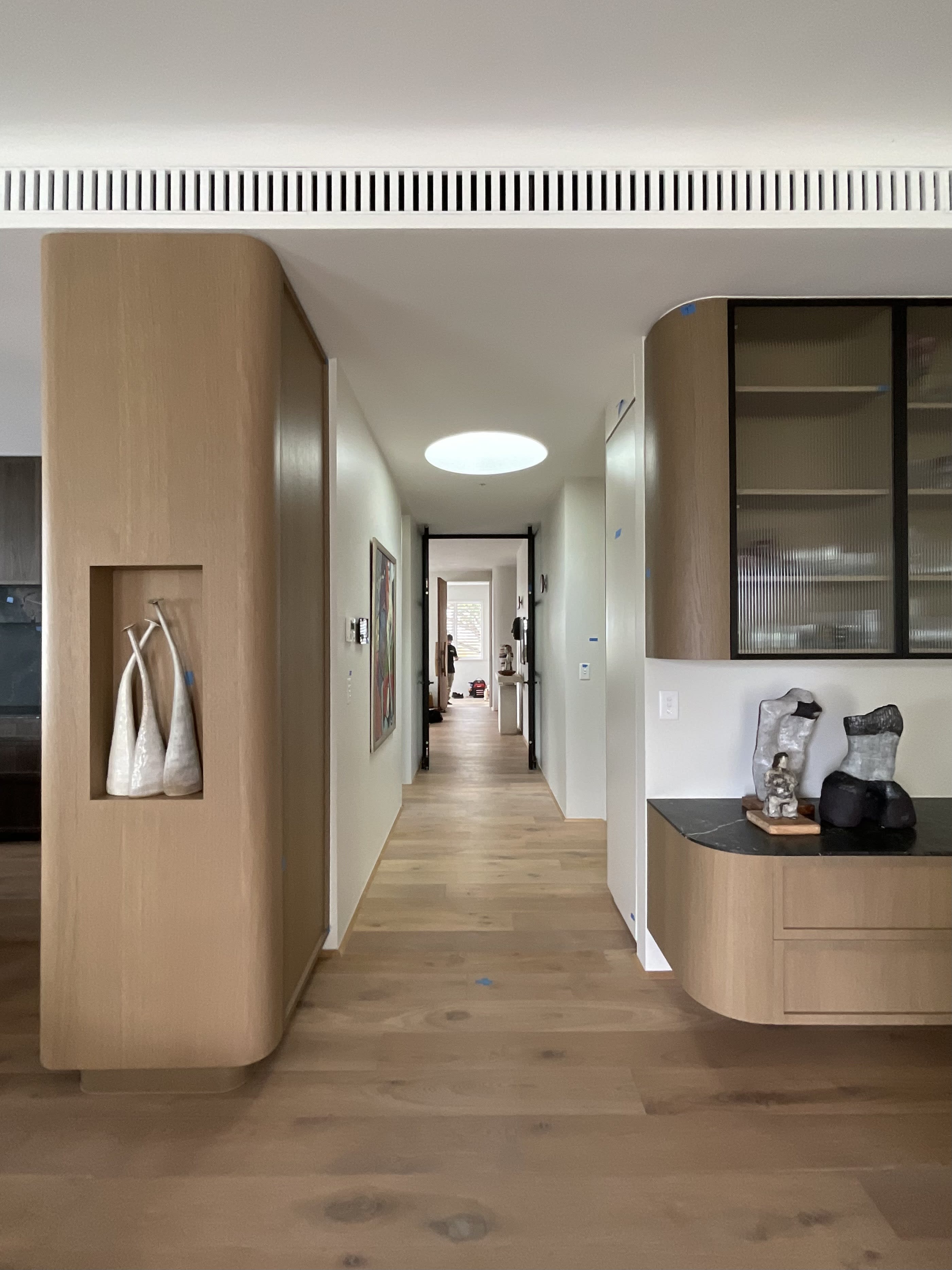
We were engaged at the early stage, before major construction had commenced, when only the structural framework was in place.
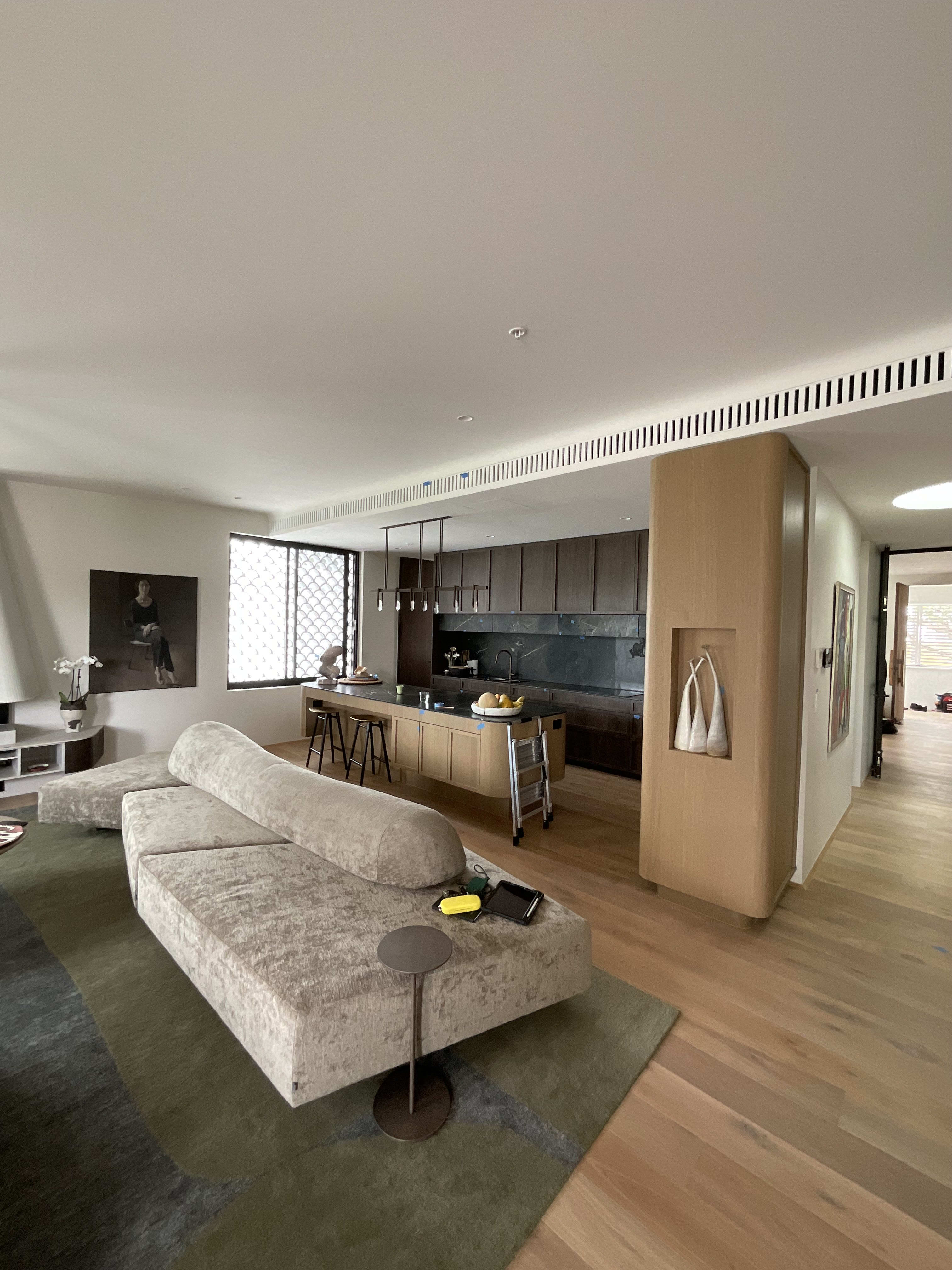
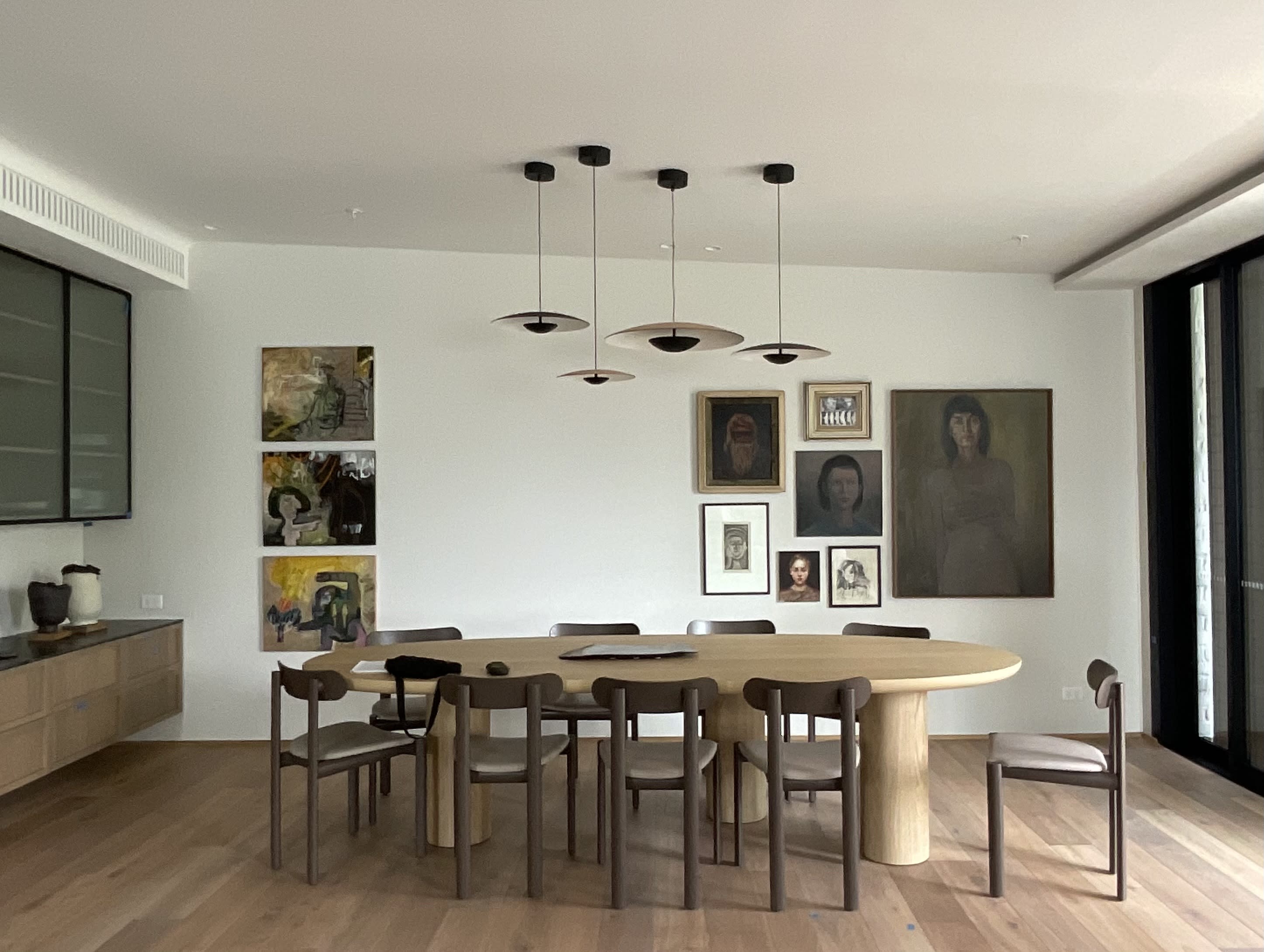
This allowed us to shape and control spatial flow, refine lighting strategy, and redesign joinery, electrical planning, and finishes from the outset. Furniture and artwork were considered as part of the overall design, not introduced afterwards.
|
|
|
|
|
Every power point, lighting position, and spatial relationship was resolved around how the client would actually inhabit the space.
|
|
|
|
|
|
|
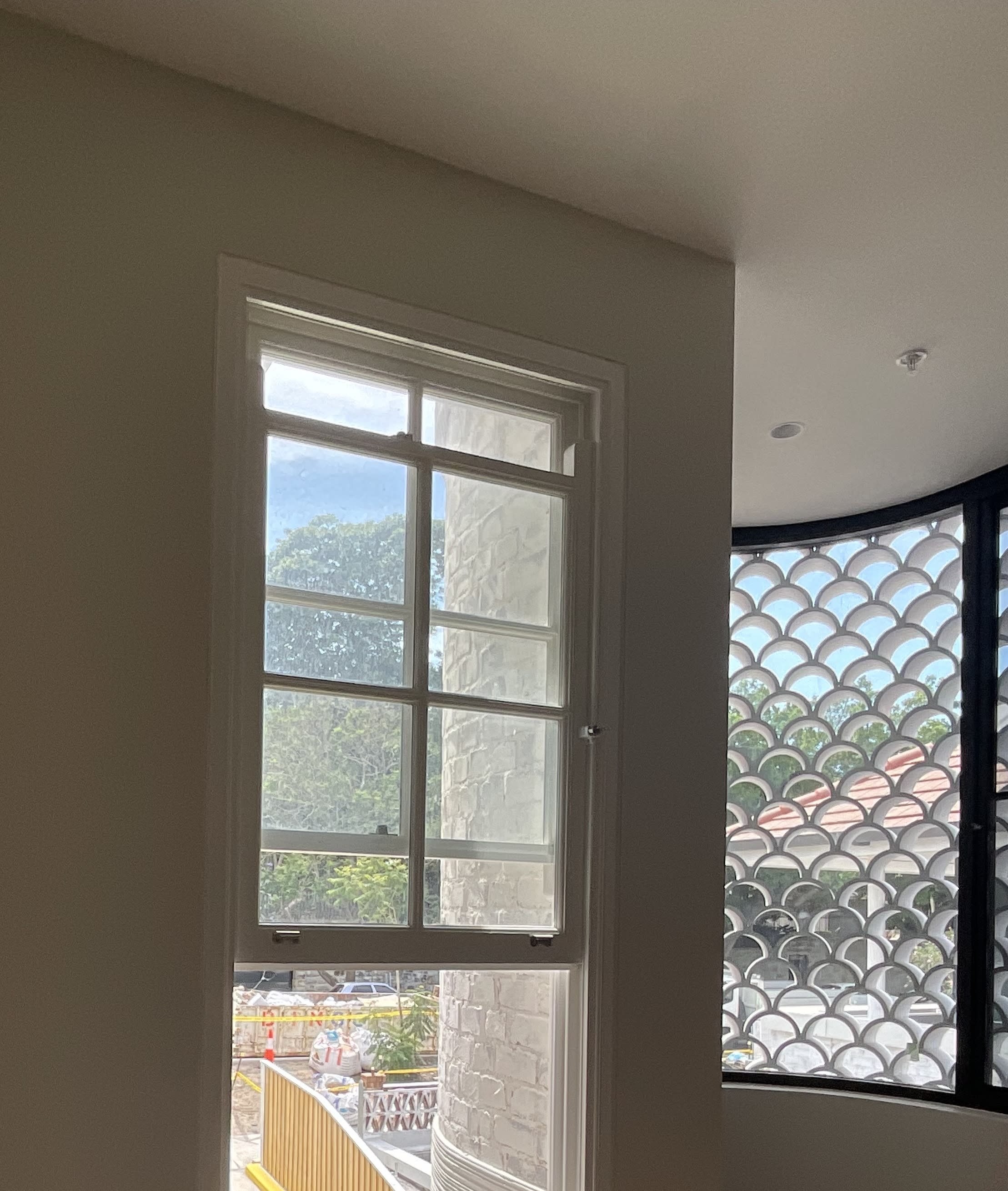
As this was also a development property, key features such as curtain integration had not been anticipated in the original developer driven design. Because we were engaged early, we were able to ensure structural support was integrated above the windows so the ceiling could properly carry the load.
|
|
|
|
|
The hallway layout and joinery were also refined early, including repositioning the powder room entry to improve privacy and flow, and reworking the kitchen, butler's pantry and laundry room to better suite our clients requirements.
The decisions themselves are not complex.
The difference is when they are made.
|
|
|
|
|
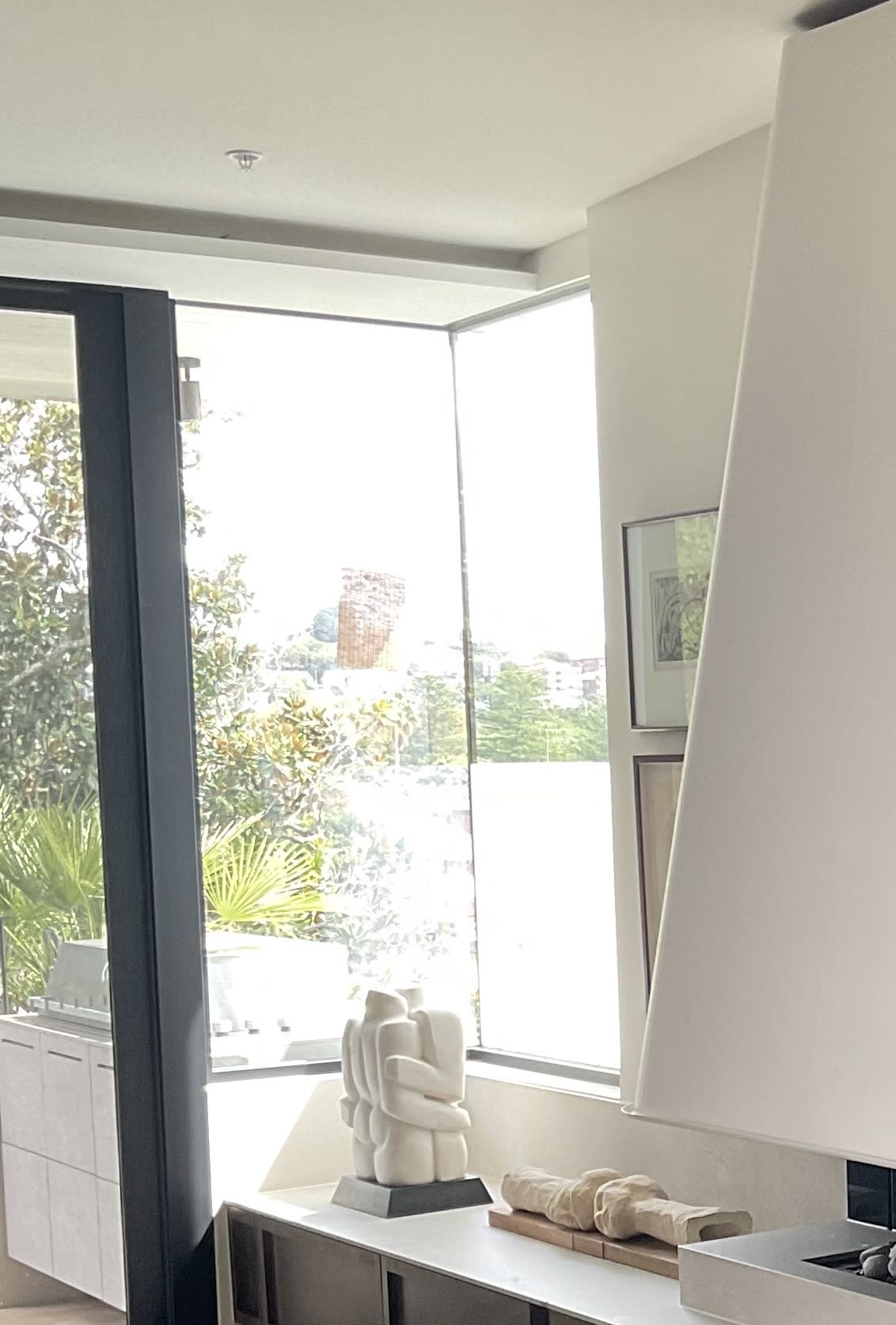
In other areas, constraints were already fixed. The raked ceiling and corner junction detail made curtains in this space impractical. We resolved this with a tailored blind solution that maintained visual clarity while respecting the architecture.
|
|
|
|
The Difference
In one project, decisions were made at the point where they could define the outcome.
In the other, those same decisions began to impact what was already complete.
What could have been resolved early became something that required adjustment, often introducing compromise across design intent, timeline efficiency, cost efficiency, and surrounding built elements.
More importantly, the role of design shifts.
It moves from shaping outcomes to resolving constraints.
Finishes, furniture, and styling can always be refined.
What is far harder to change is the underlying structure that determines how a space actually functions and feels to live in.
|
|
|
|
The Invisible Layer
Every project has a decision-making window that sits ahead of construction.
Within this window, decisions are direct and efficient. Once it begins to close, changes become progressively more complex, more costly in coordination, and more disruptive to already resolved elements.
This is why we prioritise resolving design before construction or demolition begins. It reduces uncertainty, protects budget efficiency, and allows the build process to proceed with clarity and control.
Whether it is a renovation, a new build, or an off-plan purchase, the principle remains consistent.
Timing is not a detail in a project.
It is what determines whether a space is merely completed, or truly resolved.
|
|
|
|